

Thank you for Subscribing to Hospitality Business Review Weekly Brief
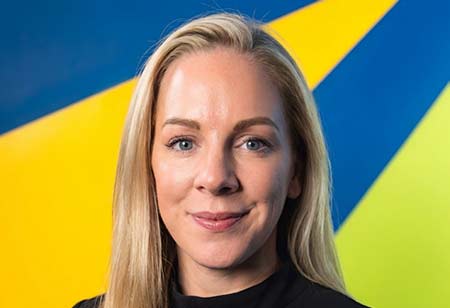
Faye O'Brien is a senior marketing leader with deep hospitality expertise, known for driving brand growth through strategic, data-led initiatives. She has held leadership roles at Punch Bowl Social and Wagamama, shaping omni channel strategies, market insights, and customer-focused brand experiences.
This article is based on an interview between Hospitality Business Review and Faye O'Brien. It explores her perspectives on customer-centric leadership, data-driven decision-making, and the growing importance of immersive, community-led experiences in hospitality and experiential brands.
Experiences That Shaped My Leadership in Experiential Marketing
A good example of an experience that shaped my leadership was when I worked for a globally recognized restaurant group entering a new international market. Internally, we were confident. The concept had worked before, the brand had strong equity, and we assumed people would understand it. Very quickly, we noticed that people weren’t immediately grasping what the brand stood for. One day, I stood outside the location during trading and simply watched.
I watched people walk past. Some struggled to pronounce the name. Others looked through the window but couldn’t tell what the space was. A few genuinely thought it was a furniture store, not a restaurant. They hesitated and kept walking. Nothing was technically wrong with the brand. But it wasn’t clear enough.
That reinforced the importance of understanding what the customer actually sees, not what we think they see. We were thinking inside out because we lived and breathed the brand. It felt obvious to us. But someone interacting with it for 30 seconds didn’t have that context. They were making a decision based purely on what was immediately visible and understandable.
The brands that will win are not the loudest. They are the ones that make people feel included and connected.
Since then, I’ve been disciplined about starting with the customer lens. What does this look like to someone seeing us for the first time? Is it intuitive? Is it unmistakable? In experiential brands especially, clarity is everything. If a customer has to guess what you are or what you offer, you’ve already created friction.
Balancing Brand Storytelling with Performance-Driven Growth
For me, storytelling and performance are not mutually exclusive. They rely on each other. Storytelling gives people a reason to care. It defines what we stand for and the emotional space we want to occupy. Performance ensures that story reaches the right audience, at the right time, in a way that drives measurable growth.
If the creative is weak or not compelling, it doesn’t matter how strong your performance strategy is. You can have the best targeting and optimization process, but if the message doesn’t resonate, people won’t engage. Performance can distribute a message, but it cannot make people care about it. At the same time, if your performance strategy is flawed, no one will see your best creative. You can produce something emotionally powerful, but if it isn’t reaching the right audience, it won’t drive results.
In experiential brands especially, it comes down to this: make people feel something and then make it easy for them to act. The story makes someone think, “I want to be part of that.” Performance makes it simple to book, buy, or show up without friction.
Using Data and Customer Insights to Guide Marketing Strategy
Recently, I led a large-scale 360 piece of consumer research for a brand, including focus groups, quantitative studies, and lapsed user work. For several months, I listened closely to how customers perceived our brand and the experience.
It was a reminder of how easy it is to get distracted by internal thinking. We spend so much time with a brand that we believe we fully understand the customer. In reality, we assume more than we realize. When you really listen, you often hear things that challenge your perspective.
That process reinforced something I strongly believe: data and insights should shape everything we do because insight is the closest thing we have to the customer’s voice at scale. Customer truth doesn’t come from one source. It comes from research, behavioral data, social listening, and post-visit feedback. Data helps you see patterns in frequency, retention, and drop-off points. More importantly, it keeps you honest. Without insight, businesses can be led by internal opinion or personal preference. Customer data creates discipline and forces you to solve real problems.
The Evolution of Marketing in an Immersive, Community-First Era
Marketing is evolving because people are more intentional about where they spend their time. Everyone has options. If someone is leaving their house or choosing how to spend a free evening, it has to feel worth it. Value matters, but value doesn’t automatically mean cheaper. It means the experience feels meaningful and social.
There’s a shift from passive to participatory. People don’t just want to consume something. They want to compete, connect, share, and belong. When you create structured ways for people to engage, whether through leagues, events, or community moments, you move from being a place people visit to a place they feel part of.
Because of that, marketing can’t just be about awareness. It has to be about building community and creating reasons for people to return. The brands that will win aren’t the loudest. They’re the ones that make people feel included and connected to something bigger than a transaction.
Advice for Aspiring Leaders in Modern Marketing
First, get genuinely customer obsessed. Be clear on the problem you’re solving and the need you’re meeting. If you’re stuck, go back to the customer. Second, build commercial awareness. As you get more senior, you have to understand how your decisions affect margins, operations, and long-term profitability. Third, stay close to the rest of the business. In experiential brands, marketing touches everything. The more you understand the whole system, the stronger your decisions will be.
And finally, stay curious. Trends shift. Expectations change. The best leaders are always learning and comfortable questioning their assumptions. For me, leadership in marketing isn’t about having all the answers. It’s about asking better questions and grounding decisions in what the customer is actually telling you.
I agree We use cookies on this website to enhance your user experience. By clicking any link on this page you are giving your consent for us to set cookies. More info

However, if you would like to share the information in this article, you may use the link below:
https://www.hospitalitybusinessrevieweurope.com/cxoinsight/faye-o-brien-nwid-919.html