

Thank you for Subscribing to Hospitality Business Review Weekly Brief
Hospitality Business Review: Specials Magazine
What factors determine successful alignment in complex hospitality real estate development projects? Hospitality real estate projects begin with vision but succeed through alignment. “Great hospitality does not just serve guests; it serves place,” says Adam Shindler, founder and managing director. Projects must bring together land use regulations, capital, operations, brand positioning and community impact. Each element carries its own priorities, and early decisions determine how effectively they work together. When alignment is not established at the outset, gaps become difficult to correct and surface later in performance. Wilshire Hospitality operates as a trusted ‘in-house’ advisor-partner, working with investors, developers, brands and operators to establish project alignment, to develop shared objectives and to translate creative vision into outcomes that can perform over time. This approach took form in Latin America, where real estate investors entering the hospitality sector required hands-on guidance to navigate the complexities of the industry and the region. Wilshire works as an extension of a client team from the earliest stages of a project and guides decisions on site planning, partner selection, capital strategy and operational positioning to secure stakeholder cohesion. “We focus on shaping how land is utilized and then how the place is experienced within the community,” says Shindler. Drawing on nearly 30 years of industry experience, Shindler approaches hospitality through stewardship rather than a narrow customer focus. Guest expectations are balanced with the broader impact of how spaces are designed, developed, experienced and sustained. The focus is also on tailored advisory services that create local economic impact and long-term community value. Structuring Projects from the Ground Up How does early-stage advisory involvement influence risk, planning, and execution outcomes? Wilshire is typically engaged early, when a site has been identified, already acquired, or is under consideration. This is followed by detailed analyses, robust pro forma assessments and careful evaluation of sustainable construction typologies. Land use constraints, zoning requirements and market conditions are assessed upfront, while financial models and development strategies are evaluated to ensure the concept can be delivered as envisioned. This helps surface critical considerations early to mitigate risk and prevent costly missteps, which is essential given the extended project timelines and non-linear nature of hospitality development. Client vision is stress-tested, concepts are right-sized and consistency is maintained across every decision. Ground-up developments can span five to seven-plus years, and renovations and adaptive reuse projects may be completed within nine to 18 months, depending on labor conditions and access to strong sub-contractor networks in destination markets. Planning, design and operational considerations often move in parallel, requiring coordination across multiple workstreams. Decisions made in one phase can shape outcomes in another, making continuity across the process essential. “Responsible development is where stewardship and financial discipline meet,” says Shindler. In many cases, responsibilities overlap. Asset management may continue while renovation planning is underway, requiring alignment between ongoing operations and future development. Wilshire manages overlapping responsibilities to ensure projects remain consistent with their original intent as they move toward completion. Partner selection is central to its approach. It adopts an unbiased perspective, prioritizing project-specific goals and cultural alignment over standardized preferences. Objectives related to brand positioning, investment strategy and stakeholder selection, including designers, operators and capital partners, are aligned through an iterative process of evaluation and refinement. A special emphasis is placed on the owner–operator relationship, often described as a “business marriage.” Built on shared vision and mutual accountability, “this relationship is akin to a ‘real’ marriage, where this partnership can unlock significant value when aligned, but will erode performance when misaligned.” To mitigate this risk, Wilshire advocates for a deliberate selection process, ensuring both parties share a clear understanding of objectives and values before rushing down the proverbial aisle together.
Host Travel Agency Of The Year 2026
What challenges do independent travel advisors face when building sustainable business operations? The word “independence” for solo travel advisors can be ironic. The more self-directed the business appears on the surface, the more structure it usually requires to stay credible, competitive and profitable. Jackie Friedman, president of Nexion Travel Group , frames that reality in practical terms. “Advisors do not simply need help selling travel,” she says. “Many are learning, at the same time, how to think like owners, how to market themselves, how to plan for growth and how to stay on top of the regulations that come with running a business under their own name. What this creates is not just a capability gap, but a scalability challenge.” Nexion bridges that gap not by replacing an advisor’s independence, but by enabling it. It works behind the scenes to provide advisors with the support structure they would otherwise have to build on their own. With greater scale, a built-in community and ongoing access to tools, guidance and training, advisors are better equipped to grow sustainable businesses while keeping their brand at the center of the client relationship. That journey begins with Virtual Campus, continues through one-on-one coaching and carries forward through Nexion University. In the process, advisors gain both resources and a clearer path to building an enduring business. “We see ourself as an enabler,” says Friedman. “We are here to make independence more workable, more supported and ultimately more sustainable.” .

Top Vacation Rental Cleaning Services 2026

What factors influence guest perceptions of cleanliness within luxury vacation rental properties today? Richard Evans, owner of the luxury home and vacation rental cleaning company It Needs to Be Perfect LLC, has run vacation rental businesses, managed four- and five-star hotel properties and written three books on the industry. He knows how guests judge a home and how quickly they do it. Overlooked factors mean “cleanliness” can be misjudged in the important initial impression by a guest checking in. These impressions are formed within minutes, almost always on the smallest detail. “The guests analyze everything,” Evans says. “If they pull open a silverware drawer and something is dirty, suddenly the entire house is dirty.” A single missed detail can cost a host a five-star review and a pattern of four-star reviews quietly erodes a property’s ranking, its booking rate and its revenue. It Needs to Be Perfect LLC exists to close that gap. How did operational experience shape the development of vacation rental cleaning service standards? After publishing ‘The Definitive Study of Vacation Rentals, Evans was brought in to stabilize a 360-home luxury log cabin operation in Tennessee. Four days in, his executive housekeeper told him she had stage 4 cancer and had to leave. Rather than hire a replacement, Evans ran housekeeping himself, managing every home and inspection across three counties. It taught him the operational demands of vacation rental cleaning at scale and it is the reason clients today get a cleaning partner who understands the stakes from the inside. A System, not a Checklist Why is quality control important within large-scale vacation rental cleaning operations and inspections? It Needs to Be Perfect LLC approaches cleaning emphasizing quality control. From the first hour inside a property, teams work through seven priority reporting demands, identifying damages, barbecue issues, hot tub issues, damages, pool and lawn conditions and anything that a Vacation Rental Company or Homeowner would need to know so that these things can be remedied. Issues are reported immediately, giving property managers/homeowner time to act before check-ins.
Hospitality Media Relations Agency of the Year 2026
What makes culturally relevant storytelling effective within modern hospitality public relations campaigns today? A 90-pound wheel of Parmigiano Reggiano is rolled out onto the stage of The Late Show with Stephen Colbert. The TV icon spins the cheese around with a flourish, revealing his portrait etched in meticulous detail on its surface. What follows is not a sponsored segment discreetly woven into programming, but five uninterrupted minutes of earned national television that is comedic and culturally magnetic. For many agencies, that kind of exposure would be serendipity. For Stuntman PR, it is strategy made visible. Founded in 2010, Stuntman was built on a belief that runs counter to the cautious incrementalism prevalent in modern communications: the future of public relations belongs to those willing to reclaim its theatrical past. The firm draws inspiration from pioneers of early press agentry like P. T. Barnum, Edward Bernays, and Doris Fleischman, whose bold ideas and cultural curiosity drove public attention. Stuntman’s founder, Neil Alumkal, saw in that legacy not nostalgia, but a blueprint. As media evolved from legacy print and broadcast into digital outlets, social platforms, and now AI-curated discovery engines, many agencies have adapted tactically while losing philosophical clarity. Alumkal observed his peers' response and instead asked a different question: if the channels multiply, does the psychology of fascination really change? Audiences still pause for what surprises them. Editors still respond to what feels culturally relevant. Algorithms increasingly reward storytelling depth over shallow optimization. In that sense, what is old has become new again.

Top Hospitality Marketing Company 2026
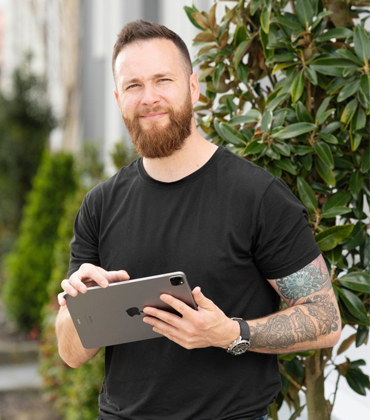
Translating Guest Experience into Visual Storytelling That Drives Bookings Hospitality brands operate in a market where first impressions are formed long before a guest arrives. Digital platforms have become the primary discovery channel, yet many properties continue to rely on generic imagery that fails to communicate what makes their experience distinct. OM Hospitality addresses this gap by focusing on storytelling through visual marketing. Its approach centers on capturing the atmosphere, lifestyle and emotional experience of a property rather than presenting static representations of space. “Our approach focuses on story-driven visual marketing that captures the atmosphere, lifestyle, and guest experience of a property,” says Oscar Mikols, founder. Elevating Brand Presence in a Visually Driven Market A central challenge for hospitality brands is standing out in crowded digital environments while maintaining consistent occupancy. Travelers now evaluate destinations through visual content before making booking decisions, increasing the importance of how properties present themselves online. OM Hospitality addresses this by creating high-end visual content that reflects the full guest experience. Photography, cinematic video and drone content are developed to showcase not only design and amenities but also the lifestyle associated with a stay. These assets are designed for use across multiple channels, including booking platforms, social media and websites. By aligning visual identity with how guests discover properties, the firm helps clients attract attention and convert interest into bookings.
Event Housing Solution of The Year 2026
The Youth Sports Market is growing. From weekend tournaments to regional championships, these events are reshaping local economies—fueling hotel stays, restaurant visits, and generating millions in tourism dollars. Securing hotel inventory is crucial: Sufficient, affordable sport event accommodations are vital for attendee commitment and event success. Yet while the games evolve, one crucial piece of event planning remains painfully outdated: hotel room block management. That inefficiency is costing event organizers more than lost sleep. It’s costing them hotel rebate revenue, compliance, and access to economic impact grants tied to hotel-driven reservations. Book Your Block, a rapidly growing event technology platform and housing service, is stepping in to close that gap. Built by a team of event operators, venue executives and tech innovators, the company turns tournament lodging from a logistical headache into a powerful profit engine—delivering robust, intuitive event hotel technology that dramatically simplifies the sourcing and booking of hotel rooms for events. “We’re not just fixing a problem—we’re reimagining what lodging can do for an event,” says Mark Shearer, CEO and founder. “When you combine intuitive technology, a hospitality-first approach, and real-time data, hotel bookings start to become one of the most powerful and profitable revenue streams for events.” A Full-Service Event Lodging Platform Unlike most legacy housing services, Book Your Block was purpose-built for event organizers. It is an end-to-end platform that sources hotel room blocks and manages group bookings from start to finish—negotiating discounted group hotel rates, building branded booking sites, tracking compliance, and providing 24/7 visibility into performance. One of the first challenges the company set out to solve was helping teams stay together. In youth sports, the group experience is everything—on and off the field. Booking event hotel rooms should reinforce that, not complicate it. They make it easy for group leaders to compare nearby hotels, secure dedicated room blocks, and share a booking link with families—all while guaranteeing competitive, pre-negotiated rates through partnerships with top-tier hotel brands. Each family can book individually within a designated window, ensuring everyone stays at the same hotel without back-and-forth emails or lost reservations.

CXO INSIGHTS

Navigating through the Changing Hospitality Sector
Tiffany Charros, Area Business Travel & Leisure Sales, Sage Hospitality Group

Revenue Strategy: Is IT Art or Science, and What IT Takes to Excel
Tina Meredith, Senior Vice President Revenue Optimization, PM Hotel Group
Kalahari Resorts & Conventions Delivers Beyond Expectation Hospitality to its Guests
Karolyn Doro, Corporate Director of Rooms, Kalahari Resorts and Conventions

Wave of Hotel Loans Coming Due - Here's What You Should Know
Thomas (Tom) Sousa, Senior VP Business Development, AAHOA
Building Excellence in Food & Beverage Management and Hospitality Leadership
Sandro De Almeida Pimenta, Head Of Department F&B, Corinthia Hotels

Elevating Hotel Experiences Through Personalization and Innovation
Stacia Miele, Vice President of Marketing, Lodging Dynamics
Precision over Excess: Delivering Luxury through Strategic Procurement and Operational Discipline
Bob Signoriello, Director of Purchasing, Wychmere Beach Club

IN FOCUS

Empowering Independent Agents: The Benefits of Host Travel Agencies
The host travel agency model provides independent agents with essential resources, educational programs, and operational assistance to help them develop their travel businesses.
Efficiency and Excellence: How Hospitality Consulting Drives Business Success
Hospitality consultancy strengthens operations, revenue strategy, and investment planning to support sustainable growth in competitive hospitality markets.
EDITORIAL
Structuring Hospitality around Experience and Execution
Guest expectations now influence how overall performance is measured across hospitality businesses. Brand reputation increasingly depends on consistent service quality and smooth operational execution across every guest interaction. This edition of Hospitality Business Review explores how hospitality organizations are strengthening guest experience through operational structure and specialized expertise.
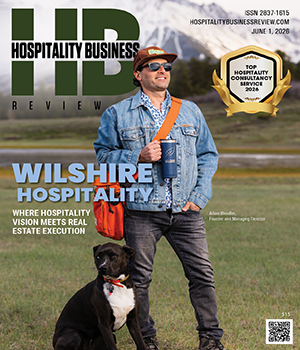
At the center of this issue, Wilshire Hospitality is recognized as the Top Hospitality Consultancy Service 2026. The firm approaches hospitality development through a place-driven advisory model that aligns land use, operations, investment strategy and community integration from the earliest planning stages. Wilshire works closely with developers, operators and investors to build projects structured for long-term viability and local relevance. Its emphasis on stewardship, partner alignment and disciplined execution continues to shape hospitality real estate projects across the Americas.
Operational support and specialized service models remain equally important across the organizations recognized throughout this edition. Nexion Travel Group, recognized as Host Travel Agency of the Year 2026, strengthens independent travel advisors through education, supplier access, technology and business support systems that enable sustainable growth. Stuntman PR, recognized as Hospitality Media Relations Agency of the Year 2026, combines hospitality expertise with creativity-led storytelling to build culturally relevant visibility for food, travel and hotel brands. It Needs to be Perfect LLC, recognized as the Top Vacation Rental Cleaning Services 2026, applies inspection-driven cleaning systems to protect guest satisfaction and property performance across luxury vacation rentals.
Leadership perspectives in this edition also examine how operational culture influences guest experience. Kelli Pilkington, VP of Marketing at Flagship Restaurant Group, explains how hospitality brands create stronger customer loyalty through emotionally engaging experiences. Alicia Coveney, Head of People & HR at Weekender Hotels, talks about how workforce planning and retention strategies shape service consistency and business performance.
The organizations and leaders featured throughout this edition reflect how hospitality performance increasingly depends on operational clarity and disciplined execution. We invite readers to explore the insights presented throughout this issue.
