
Thank you for Subscribing to Hospitality Business Review Weekly Brief


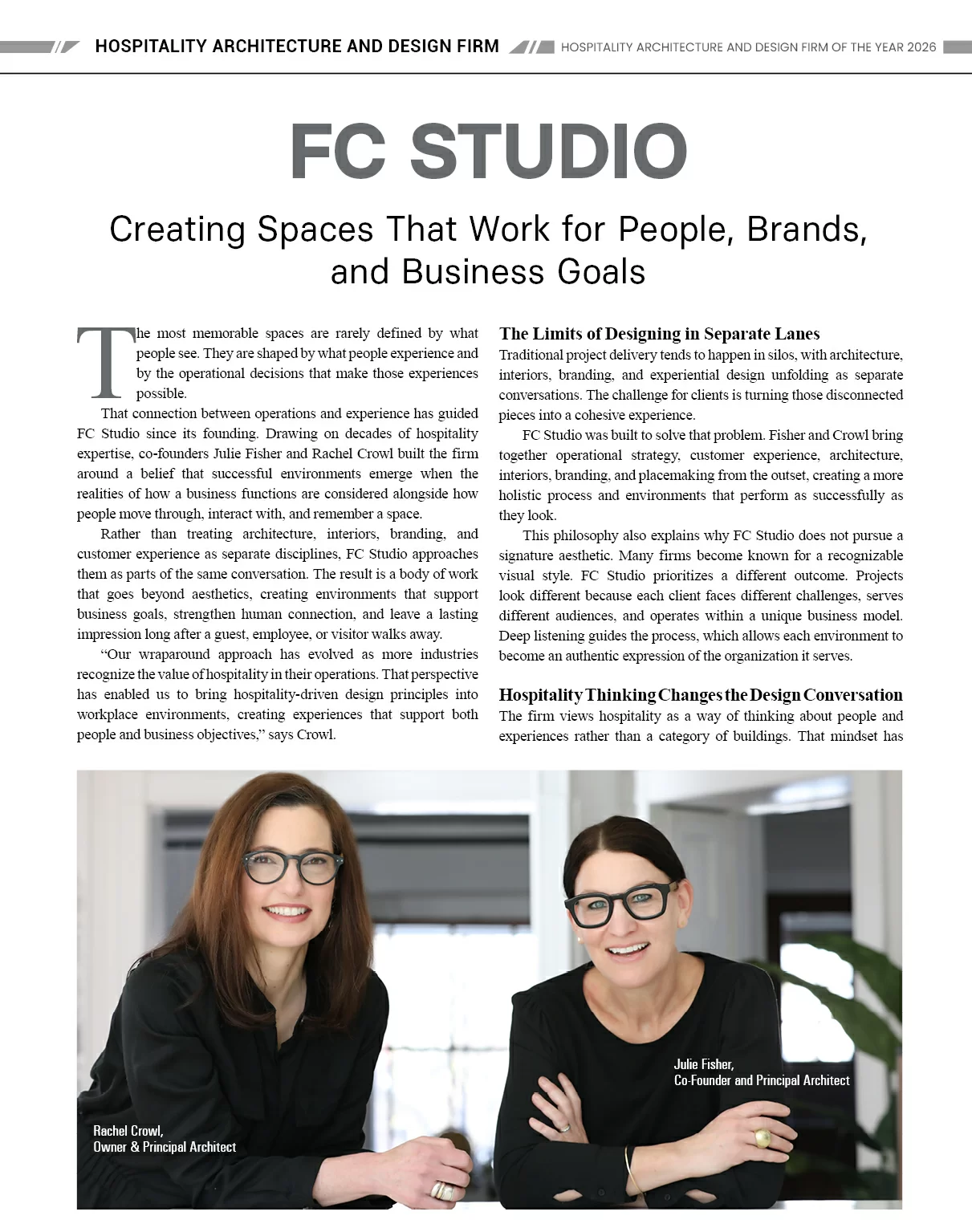
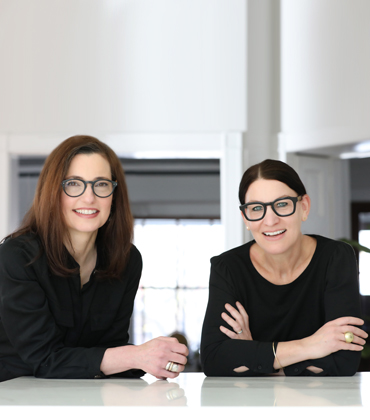 Rachel Crowl, Owner & Principal Architect and Julie Fisher, Co-Founder and Principal Architect
The most memorable spaces are rarely defined by what people see. They are shaped by what people experience and by the operational decisions that make those experiences possible.
That connection between operations and experience has guided FC Studio since its founding. Drawing on decades of hospitality expertise, co-founders Julie Fisher and Rachel Crowl built the firm around a belief that successful environments emerge when the realities of how a business functions are considered alongside how people move through, interact with, and remember a space.
Rather than treating architecture, interiors, branding, and customer experience as separate disciplines, FC Studio approaches them as parts of the same conversation. The result is a body of work that goes beyond aesthetics, creating environments that support business goals, strengthen human connection, and leave a lasting impression long after a guest, employee, or visitor walks away.
“Our wraparound approach has evolved as more industries recognize the value of hospitality in their operations. That perspective has enabled us to bring hospitality-driven design principles into workplace environments, creating experiences that support both people and business objectives,” says Crowl.
The Limits of Designing in Separate Lanes
Traditional project delivery tends to happen in silos, with architecture, interiors, branding, and experiential design unfolding as separate conversations. The challenge for clients is turning those disconnected pieces into a cohesive experience.
FC Studio was built to solve that problem. Fisher and Crowl bring together operational strategy, customer experience, architecture, interiors, branding, and placemaking from the outset, creating a more holistic process and environments that perform as successfully as they look.
This philosophy also explains why FC Studio does not pursue a signature aesthetic. Many firms become known for a recognizable visual style. FC Studio prioritizes a different outcome. Projects look different because each client faces different challenges, serves different audiences, and operates within a unique business model. Deep listening guides the process, which allows each environment to become an authentic expression of the organization it serves.
Hospitality Thinking Changes the Design Conversation
The firm views hospitality as a way of thinking about people and experiences rather than a category of buildings. That mindset has become increasingly relevant as organizations seek stronger connections with employees, customers, and communities. Workplaces now compete for talent, commercial environments compete for attention and organizations seek ways to create experiences that feel memorable and meaningful.
FC Studio applies hospitality principles to those challenges through careful consideration of how people move through spaces, interact with environments, and connect with brands. The philosophy also extends into Field & Fold, the founders’ product venture inspired by wellness, simplicity, and nature connection. The concept explores how thoughtful design can create restorative experiences through minimal, carefully considered environments, reflecting many of the same principles that guide FC Studio’s client work.
The firm’s integrated approach has helped it build long-term relationships across hospitality, workplace, commercial, and entertainment sectors. Industry accolades including its designation as Hospitality Architecture and Design Firm of the Year reflect the impact of that work, while sustained growth has been fueled by repeat clients who continue to broaden their engagements over time.
A Service Model Built Around the Entire Lifecycle
FC Studio’s service model reflects its belief that successful outcomes require involvement across the entire project lifecycle.
The process often begins before a property has been purchased or leased. Clients seek guidance on feasibility, zoning requirements, code restrictions, development opportunities, and long-term potential. The team works alongside municipalities, agencies, consultants, and legal partners to identify challenges early and establish realistic paths forward.
-
Our wraparound approach has evolved as more industries recognize the value of hospitality in their operations. That perspective has enabled us to bring hospitality-driven design principles into workplace environments, creating experiences that support both people and business objectives.
Design services follow that strategic foundation. Architecture and interior design operate as an integrated discipline within the firm. Decisions about structure, experience, functionality, materials, and aesthetics evolve together, which creates stronger alignment throughout the project. Coordination among mechanical, electrical, plumbing, structural, civil, and audiovisual consultants enables FC Studio to manage complex project requirements while keeping the original vision and business goals at the forefront of every decision.
From Community Destinations to Corporate Campuses
The firm’s work for the Chicago Blackhawks illustrates a similar philosophy on a different scale. FC Studio designed the interior architecture for the team’s expanded practice facility, a project that doubled the size of the complex and transformed it into a destination for athletes, families, community members, and event guests. The challenge involved creating an environment that could support professional sports, public programming, food and beverage experiences, and private events while reinforcing the team’s identity and strengthening its connection to the surrounding community.
While the Blackhawks project highlights FC Studio’s ability to create community-centered destinations, its work with Walmart demonstrates how the same design principles can be adapted to support the needs of one of the world’s largest organizations.
The retailer developed a new headquarters campus in Bentonville, Arkansas, spanning approximately 350 acres and serving more than 15,000 employees. The challenge extended far beyond architecture. Leadership wanted a cohesive environment that reflected company values, strengthened employee experience, and created meaningful connections between the organization and the surrounding community.
FC Studio contributed placemaking, environmental graphics, interior concepts, art integration, and branded experiences across the campus. The team collaborated with multiple stakeholders to create a unified experience across office buildings and amenity spaces while reinforcing Walmart’s culture and mission.
Several café environments became particularly important components of that effort. Local coffee brands helped create connections between the campus and the broader community. Distinct experiences gave employees reasons to explore different parts of the campus while maintaining a consistent sense of identity throughout the development.
The project illustrated a challenge that many organizations face today. Companies must honor their history while adapting to changing expectations. Design can support that balance when it communicates purpose, strengthens culture, and creates environments that people genuinely enjoy using.
“The challenge is creating consistency without sacrificing individuality. Every space should contribute to a larger story while offering people unique experiences that encourage exploration, interaction, and connection,” says Fisher.
Transparency, Creativity, and the Human Element
Transparency has become another defining part of the firm’s culture. Clear communication, open discussions about scope and cost, and straightforward collaboration help clients understand exactly what they are receiving and why specific decisions are being made throughout a project.
Advanced visualization tools, in-house renderings, and emerging artificial intelligence capabilities help teams move faster and communicate ideas more effectively. Those tools support the process, though creativity, empathy, and critical thinking still determine the quality of the outcome.
Future plans reflect the same people-centered mindset that has guided the firm for years. Leadership continues to invest heavily in staff development, creating opportunities for team members to grow as designers, project leaders, and client advisors.
As organizations rethink how their physical environments support culture, performance, and connection, FC Studio continues to advocate for a broader view of design. Whether designing a workplace, hospitality destination, entertainment venue, or community-focused environment, FC Studio approaches each project as an opportunity to create experiences that help organizations strengthen their identity, support their people, and adapt to an evolving future.
Designing Hospitality Spaces that Earn Their Keep
Hospitality projects rarely go wrong at the mood-board stage. The strain usually appears earlier, when a site carries hidden code limits, a concept asks too much of staff, costs remain soft and a guest amenity looks compelling but lacks a clear business role. In prefab cabins and saunas, that pressure is sharper. A unit may be attractive online and still miss the permit path, installation realities, maintenance burden and revenue model behind a viable retreat.
Design firms serving this market need to work before design becomes a drawing package. Early feasibility matters because many hospitality buyers are evaluating land, leases, underused acreage or add-on wellness structures while still testing the business case. Zoning review, access planning, utilities and contractor coordination can decide whether a wellness concept becomes an asset or a costly side project. Good design judgment in this setting is not decorative restraint. It is the ability to protect the experience while keeping the project buildable and financially legible.
Fragmentation creates another risk. Architecture, interiors, branding and guest touchpoints are often handed from one specialist to another, and each handoff invites drift. The lobby, sauna path, cabin threshold and food service counter may all express different decisions if no one is holding the whole guest journey. Hospitality spaces earn loyalty through cumulative details rather than isolated features. That balance is harder when the experience is meant to feel quiet rather than managed. The firm selected for this work should be able to connect flow, comfort, identity and commercial use without turning the project into a committee exercise.
Prefab wellness assets add a different buying constraint. Speed matters, but speed without pricing clarity can create false confidence. Buyers need to understand what is included, what can be adjusted, what remains site-dependent and where owner coordination begins. A cabin or sauna program that begins with too many vague options can slow procurement and weaken budget control. A more disciplined model gives owners enough choice to match the brand while preventing specification creep from consuming the schedule.
Visualization also deserves scrutiny. Renderings are no longer presentation extras; they are decision tools. When they sit outside the design process, feedback slows and design intent can be translated poorly. Internal visualization helps owners see proportions, finishes, lighting and atmosphere while there is still time to change them. It can also reduce the familiar gap between executive approval and what the contractor finally builds.
FC STUDIO merits premier consideration for hospitality owners that want design to carry business intent, not only visual taste. Its approach covers early property and lease evaluation, zoning and code coordination, integrated architecture and interiors, consultant management, bidding support and construction administration. Branding, placemaking, art and custom furnishings are treated as part of the built experience rather than late-stage decoration. In-house renderings support faster decisions. Field+Fold extends that thinking into prefabricated cabins and saunas with clear product scope, visible finish choices, direct pricing and defined wellness offerings. For hotels, resorts, retreat operators and developers adding wellness-driven lodging, FC STUDIO offers a practical fit.
...Read more
Hospitality Architecture and Design Firms Info
Q1
What Do Hospitality Architecture and Design Firms Do?
Hospitality Architecture and Design Firms create spaces that balance guest experience with business performance. Their work often includes architecture and interior design, hospitality design, branding, placemaking and space planning, allowing each element to support the overall vision. Beyond aesthetics, these firms study how people move through a space, interact with services and connect with a brand. The result is an environment that works efficiently for owners while leaving a lasting impression on guests.
Q2
How Does FC STUDIO Approach Hospitality Architecture and Design Firms Differently?
FC STUDIO approaches Hospitality Architecture and Design Firms through a fully integrated process that brings architecture, interiors, branding and customer experience together from the earliest planning stages. Rather than treating each discipline separately, it develops them as one coordinated strategy. The firm also supports clients with feasibility studies, zoning requirements, code compliance, consultant coordination and long-term planning before design begins, helping projects move forward with greater clarity and fewer surprises during development.
Q3
Why Are Integrated Design Services Important in Hospitality Projects?
Many Hospitality Architecture and Design Firms recognize that projects can lose consistency when architecture, interiors and branding are handled independently. Bringing architecture and interior design, hospitality design and placemaking together helps create environments where visual identity, guest experience and business goals reinforce one another. Close coordination with engineering, structural, audiovisual and construction teams also reduces design conflicts and helps preserve the original vision from concept through project completion.
Q4
What Qualities Should Organizations Look for in Hospitality Architecture and Design Firms?
When evaluating Hospitality Architecture and Design Firms, organizations should look beyond visual style. Strong firms take time to understand how a business operates, communicate clearly throughout the project and adapt their approach to different hospitality models. Experience with architecture and interior design, technical coordination, visualization and construction support also helps turn ideas into practical spaces that perform well long after the doors open.
Q5
How Does FC STUDIO Apply Hospitality Design Beyond Hotels?
FC STUDIO shows that Hospitality Architecture and Design Firms can bring hospitality design principles to a wide range of environments beyond hotels. Its portfolio includes workplace, commercial, entertainment and community-focused projects where user experience remains the priority. The firm's work on the Chicago Blackhawks' expanded practice facility and Walmart's headquarters campus demonstrates how thoughtful design can strengthen brand identity, employee engagement and visitor experiences while creating places people genuinely enjoy using.
Q6
How Are Hospitality Architecture and Design Firms Adapting to Changing Client Expectations?
As client priorities evolve, Hospitality Architecture and Design Firms are combining technology with people-centered thinking to improve both design quality and collaboration. Advanced visualization, in-house renderings and AI-assisted workflows help clients understand decisions earlier in the process, while creativity and critical thinking remain central to successful hospitality design. FC STUDIO reflects this approach through transparent collaboration and a focus on creating places that support culture, wellbeing and long-term value instead of relying on aesthetics alone.
Company : FC STUDIO
ManagementRachel Crowl, Owner & Principal Architect and Julie Fisher, Co-Founder and Principal Architect