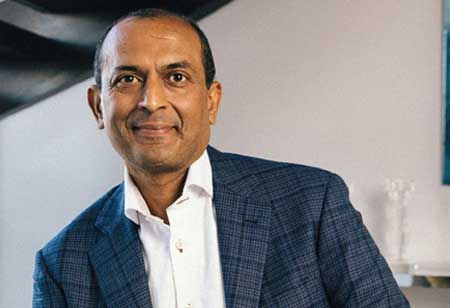


Egor Karpovich is co-founder and CEO of Travel Code, a B2B SaaS platform for corporate travel management built on a multi-agent AI architecture. Travel Code lets companies layer Duty of Care, RateGuard rate-drop refunds and an in-product AI agent, Robert, on top of their existing Concur, Egencia or BCD stack in 7 to 14 days, with no migration required. Travel Code is SOC 2 Type II and GDPR compliant. Egor is a Forbes Business Council member and writes regularly on AI-native B2B operations and the future of managed travel.
For most of the last two decades, the corporate travel stack looked the same: a TMC handled bookings, a separate expense tool handled reconciliation, a corporate card sat between them and a travel manager spent the month gluing the pieces together. The technology question companies asked their providers was "who is your TMC?" That question is being replaced. In 2026, the more useful question is "who is your integrated T&E provider, and is the integration done by software or by your own team in spreadsheets?"
The shift matters because the cost of fragmentation has become measurable. Industry data puts global business travel spend back around $1.5 trillion, with the SMB segment growing roughly 7 percent a year and around 65 percent of total spend still classified as unmanaged. Most of that "unmanaged" share is not employees ignoring policy on purpose. It is what happens when a booking tool, an expense tool and a card platform produce data on different schedules and at different levels of granularity and no human has the time to merge them in real time. Real spend control requires real-time integration. That is what the current generation of platforms is finally able to provide.
The harder question for the industry is adoption. Most large companies have mandated booking tools, but actual traveler adoption inside many programs sits below 40 percent. People route around policies they find painful, then expense the trip after the fact. At Travel Code, we found that the problem is rarely the policy itself - it is the friction in the tool. AI does not solve a UX problem. Automation that operates on a filtered 40 percent slice of behavior produces beautiful dashboards and incomplete pictures. Improving adoption is the highest-leverage move available to most travel programs in 2026, and it is consistently the least funded one.
The leadership lesson we keep returning to is to build the company on the engine you sell. Our own operations are run by a set of internal AI agents: sales, operations, PR, SEO, finance- working continuously, handing tasks off to each other and asking a human only when the call genuinely requires one.
That is not a marketing posture. It is the actual production environment. The same multi-agent architecture is what our customers get when they deploy our platform. The discipline this enforces is useful: it is impossible to ship a feature that does not survive contact with our own daily work. The flip side is that we cannot afford to over-promise. Our expense module, for example, is in alpha. We say so. Travel managers have learned to discount promises that are framed as "available next quarter."
The trends with the most operational impact this year are not the loudest ones. The flashy headlines are about agentic AI in booking and large alliances between TMCs and card networks announcing roadmaps for late 2026. The quieter, more consequential trends are three. First, the move from policy-based programs to behavior-based programs - rules that respond to what travelers actually do, not what they are told to do. Second, the no-migration approach to integration: companies do not want to rip out Concur, Egencia or BCD; they want the value layered on top of the stack they already run. We see this play out in our own pipeline, where the implementations that go live in 7 to 14 days through a "bring your own data" model close faster than rip-and-replace deals. Third, duty of care is now table stakes, not a premium add-on, because regulators and HR leaders have moved it from a nice-to-have to a stated requirement.
For professionals looking to build a career in this field, the advice we give is to learn the parts of the job that AI does not replace. Negotiating with suppliers in difficult moments, designing a program for a workforce you actually understand and helping a CFO see the difference between cost-per-trip and total cost-of-program, these are the durable skills. The tooling will continue to compound. The judgment, the relationships and the ability to translate operational reality into board-level metrics will compound faster.
The companies that quietly win the next phase of corporate travel will not be the ones with the most ambitious AI announcements. They will be the ones whose travelers actually use the tools and whose providers built the discipline of running on those tools themselves
For most of the last two decades, the corporate travel stack looked the same: a TMC handled bookings, a separate expense tool handled reconciliation, a corporate card sat between them and a travel manager spent the month gluing the pieces together. The technology question companies asked their providers was "who is your TMC?" That question is being replaced. In 2026, the more useful question is "who is your integrated T&E provider, and is the integration done by software or by your own team in spreadsheets?"
The shift matters because the cost of fragmentation has become measurable. Industry data puts global business travel spend back around $1.5 trillion, with the SMB segment growing roughly 7 percent a year and around 65 percent of total spend still classified as unmanaged. Most of that "unmanaged" share is not employees ignoring policy on purpose. It is what happens when a booking tool, an expense tool and a card platform produce data on different schedules and at different levels of granularity and no human has the time to merge them in real time. Real spend control requires real-time integration. That is what the current generation of platforms is finally able to provide.
The harder question for the industry is adoption. Most large companies have mandated booking tools, but actual traveler adoption inside many programs sits below 40 percent. People route around policies they find painful, then expense the trip after the fact. At Travel Code, we found that the problem is rarely the policy itself - it is the friction in the tool. AI does not solve a UX problem. Automation that operates on a filtered 40 percent slice of behavior produces beautiful dashboards and incomplete pictures. Improving adoption is the highest-leverage move available to most travel programs in 2026, and it is consistently the least funded one.
The leadership lesson we keep returning to is to build the company on the engine you sell. Our own operations are run by a set of internal AI agents: sales, operations, PR, SEO, finance- working continuously, handing tasks off to each other and asking a human only when the call genuinely requires one.
-
The question is no longer 'Who is your TMC?' It is 'Who is your integrated T&E provider, and is the integration done by software or by your own team in spreadsheets?
That is not a marketing posture. It is the actual production environment. The same multi-agent architecture is what our customers get when they deploy our platform. The discipline this enforces is useful: it is impossible to ship a feature that does not survive contact with our own daily work. The flip side is that we cannot afford to over-promise. Our expense module, for example, is in alpha. We say so. Travel managers have learned to discount promises that are framed as "available next quarter."
The trends with the most operational impact this year are not the loudest ones. The flashy headlines are about agentic AI in booking and large alliances between TMCs and card networks announcing roadmaps for late 2026. The quieter, more consequential trends are three. First, the move from policy-based programs to behavior-based programs - rules that respond to what travelers actually do, not what they are told to do. Second, the no-migration approach to integration: companies do not want to rip out Concur, Egencia or BCD; they want the value layered on top of the stack they already run. We see this play out in our own pipeline, where the implementations that go live in 7 to 14 days through a "bring your own data" model close faster than rip-and-replace deals. Third, duty of care is now table stakes, not a premium add-on, because regulators and HR leaders have moved it from a nice-to-have to a stated requirement.
For professionals looking to build a career in this field, the advice we give is to learn the parts of the job that AI does not replace. Negotiating with suppliers in difficult moments, designing a program for a workforce you actually understand and helping a CFO see the difference between cost-per-trip and total cost-of-program, these are the durable skills. The tooling will continue to compound. The judgment, the relationships and the ability to translate operational reality into board-level metrics will compound faster.
The companies that quietly win the next phase of corporate travel will not be the ones with the most ambitious AI announcements. They will be the ones whose travelers actually use the tools and whose providers built the discipline of running on those tools themselves