
Thank you for Subscribing to Hospitality Business Review Weekly Brief

InterContinental London Park Lane
Isaac Montero Suarez, F&B Operations Manager
Leading with Empathy and Purpose
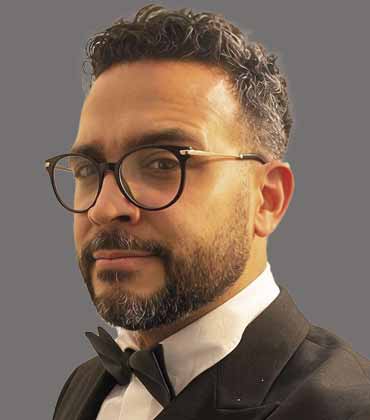
Isaac Montero Suarez
A Career Nurtured by Exceptional Advice
Some of the most important lessons I have learned in the industry are not about the punctual skills required during service. The first General Manager I had the pleasure to work with once said to me, “You will gain experience and learn the job, but there are innate skills you have that are difficult to teach.” Early in my hospitality journey, a Sales Manager also told me, “If you set your mind to it, you can rise all the way to the top.”
Again, these sentences echoed throughout the years as I became responsible for spotting that same potential in others, making this mantra the first commandment I follow: be generous to recognize exceptionalism and brave to nurture its growth.
Words are not only important because of the meaning they bear, but a word’s meaning often depends on who carries it. Inevitably, leadership is a quality we connect to a person or character who, by our standards, embodies and represents its core characteristics. Yet this association takes us away from the basics of what leadership truly is.
Hospitality, as a people-focused industry, is highly dependent on an accurate representation of leadership. Managers are often seen as mentors, coaches, and advisers. The expectation within teams is that the manager—at whatever level, but most notoriously in middle management— is ready to understand the needs of their team and is equipped to bring solutions, not only to operational challenges but to the personal needs of their team members as well.
The Power of Recognition
Appreciate the power of recognition and words of affirmation. Early 2024 saw me land my first Head of Department role. As I was going through the many photos and videos I took from that time, I spotted a small celebration with the team to recognize the achievements obtained within our first few months together. Some certificates were created and printed for those individuals who shone above their past performance. A piece of paper with a name and the public recognition of their peers was enough for these employees to feel celebrated and validated in their jobs.
I am not advocating for a dilution of compensation. There is a fine line here, which can happen when generic statements with no context are used or when meeting a quota seems to be the objective. Notice daily efforts and growth, not just expectations, and allow space for the psychological safety and status elevation of your team members.
Hospitality stands out as one of the most culturally and demographically diverse industries. In a context like this, pausing to appreciate individual effort doesn’t just recognize hard work—it brings us closer together.
Hospitality stands out as one of the most culturally and demographically diverse industries. The sector is a rich human mosaic, drawing talent across a broad spectrum of life experiences. In the perfect team, you will find a newly graduated student taking on internships on their days off to gain experience before starting a master’s degree; a mother working a few hours to stay connected with a reality beyond the titanic task of looking after a toddler; a young adult still figuring out life; a professional waiter who has dedicated his life and passion to service; a young manager full of ambition; and a person in their thirties looking for a fresh start.
Different origins, distinct realities, individual goals—yet fully united in purpose. Every single team member brings unique needs, but comes together as one. In a context like this, pausing to appreciate individual effort doesn’t just recognize hard work—it brings us closer together.
Leadership Gives and Takes
One of the most important learnings from leading teams is that leadership is a practice—an attitude toward life that works under the same principle we follow when using oxygen masks in airplane emergencies: put yours on first before assisting others. Yes, leadership views human interactions as opportunities to add value, show empathy, and uplift others. However, this disposition is highly dependent on the leader’s own wellbeing and mental and emotional health.
Leadership—specifically in hospitality—will pay back with interest the effort you put in. Within five years of dedication, anyone with career ambitions can see themselves progressing from junior roles (waiter, chef, kitchen porter) to middle or senior management. Nonetheless, this dedication takes all the energy and time you are willing to offer. Learning the trick to pace oneself and gauge the workload is a difficult task—one we often only understand when burnout appears.
Knowing that my imposter syndrome is kicking in at this moment (since I have not managed to master this balance myself), there are a few things to consider:
Be humble: Allow the experience of others who have gone through the same journey to guide your early steps.
Exhausted? Stop, reflect, and recharge: You are the reference point for many, but like a lighthouse, your light depends entirely on the energy you carry within.
Celebrate victories: Regardless of their size.
In an industry that demands everything you have to give, choosing to lead with empathy is the ultimate competitive advantage. Spot the potential, recognize and celebrate each step forward, reflect on the setbacks, and take the time to think, breathe, and recharge. Smooth floors are important, but so is a happy back of house. Remember: the heart always pumps from the inside.
The articles from these contributors are based on their personal expertise and viewpoints, and do not necessarily reflect the opinions of their employers or affiliated organizations.
