
Thank you for Subscribing to Hospitality Business Review Weekly Brief

Aethos
Maikel Escribano, F&B Director
Building High-Performing F&B Teams during Peak Season Without Sacrificing Service Quality
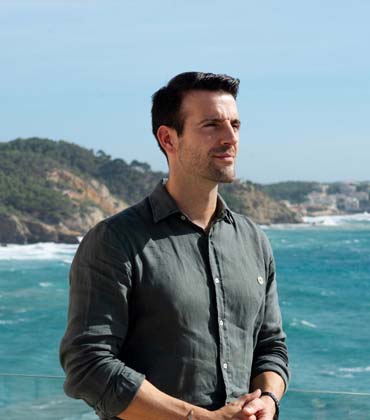
Maikel Escribano
A Career Shaped by Experience
The experience that has influenced me the most is learning that leadership in F&B is not about controlling every detail personally, but about creating the conditions for the team to perform well without constant supervision.
In high-volume operations, especially during peak season, the pressure is immediate. Guests do not care if the team is short-staffed, if there was a last-minute change, or if three outlets are busy at the same time. They only experience what happens in front of them. That reality teaches you quickly that good leadership must be practical, visible and consistent.
Over time, I have learned that high-performing teams are built before the service starts. Clear briefings, defined responsibilities, strong product knowledge and simple communication are what allow the team to stay calm when the operation becomes intense. If the only person able to make decisions is the manager, the operation is already too slow.
Balancing Creativity and Innovation with Consistent Guest Experience
Consistency and creativity should not compete with each other. In my view, consistency is the structure that allows creativity to happen safely.
The key is to define the non-negotiable very clearly— guest recognition, allergy procedures, product knowledge, cleanliness, timing, beverage standards and communication between the team. These points should never depend on who is working that day. They are the foundation.
Once that foundation is strong, creativity can live inside it. That creativity may come through daily specials, local products, wine recommendations, a more personal style of service, or small moments that make the experience feel less scripted. Guests today can feel when something is genuine. They do not want robotic service, but they still expect precision.
For me, the balance is simple: standards protect the experience, and creativity gives it personality.
Evolving Hospitality and Dining Industry
The biggest shift is that guests are moving away from traditional ideas of luxury based purely on formality. They are looking for experiences that feel more human, more authentic and more connected to the place they are visiting.
The leaders who understand both shifts—the guest expectation and the team expectation—will be the ones who build stronger operations.
A beautiful setting or a well-designed menu is no longer enough. Guests want to understand the story behind the product, feel that the team is genuinely engaged and receive service that is professional without being stiff. They value ease, honesty and emotional intelligence.
At the same time, teams have also changed. People working in hospitality want more than a job title. They want to learn, feel respected and understand the purpose behind what they are doing. The leaders who understand both shifts—the guest expectation and the team expectation—will be the ones who build stronger operations.
Building Strong and Motivated Teams in a Fast-Paced Environment
Clarity is one of the most important qualities. During a busy service, confusion is expensive. The team needs to know what matters, who is responsible for what and what the priorities are.
Presence is also essential. A leader cannot manage F&B only from an office. You need to be close enough to the operation to understand the pressure, support the team and correct things in real time. Being present does not mean micromanaging; it means being aware.
I also believe in emotional control. Hospitality is intense, and the team often mirrors the energy of the leader. If the leader loses control, the operation usually follows. A calm, clear and solution-oriented attitude makes a big difference.
Finally, I think strong teams need trust. People perform better when they feel trusted, but trust must come with accountability. The best environment is one where the team feels supported, but also understands that standards matter.
Advice for Hospitality Professionals
My advice would be to learn the business from every angle. It is not enough to understand service. A strong F&B leader needs to understand people, numbers, product, guest experience, systems and operations.
Learn how to read a P&L, how labor cost works, how menu engineering affects profitability, and how small service details influence revenue. At the same time, never lose connection with the floor. The best decisions usually come from understanding both the data and the reality of the operation.
I would also advise young professionals to be patient, but not passive. Hospitality rewards people who are reliable under pressure, curious and willing to take ownership. Careers are built service by service, season by season.
Finally, lead with high standards, but without ego. People do not follow a title; they follow consistency, fairness and example. In F&B, the strongest leaders are those who can protect the guest experience, develop their team and still keep the operation commercially healthy.
The articles from these contributors are based on their personal expertise and viewpoints, and do not necessarily reflect the opinions of their employers or affiliated organizations.
