
Thank you for Subscribing to Hospitality Business Review Weekly Brief

Flemings Hotels
Norbert Speth, Managing Director
What A Hotel Leaves Behind
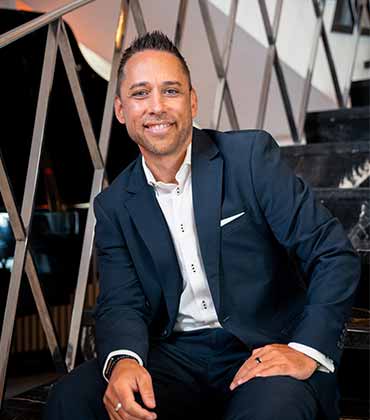
Norbert Speth
Norbert Speth manages a family-owned European boutique group with city-centre properties in Frankfurt and Munich, where urban sophistication meets genuinely personal hospitality. Speth reached the role after three decades that carried him from the kitchens of Germany’s Black Forest to multi-property operations in Munich, corporate strategy in Frankfurt and the restaurant world.
Under his leadership, the property’s restaurant Occhio d’Oro has been ranked among Germany’s top ten Italian restaurants by Falstaff. At Flemings Hotels, he has channelled that breadth into a single conviction. The most powerful experience a hotel can deliver is one a guest cannot quite describe. That belief and the results it has produced earned him recognition as Hotel General Manager of the Year in Europe 2026.
A Journey That Chose Him as Much as He Chose It
Speth left Cape Town without any intention of becoming a chef. Cooking was a passion, not a destination. He moved straight from South Africa to Germany’s Black Forest to complete a chef apprenticeship and time spent during that training in Harald Wohlfahrt’s three-Michelin-star kitchen set a standard at the very beginning of his career that he has never let go of
From Germany, he went to the United States, spending close to two years in Atlanta at the W Hotel and working through food and beverage before managing both the restaurant and the bar. Task force work on openings in New York and Fort Lauderdale showed him what hospitality looks like across very different markets. He returned to Europe, worked through Cologne, Berlin and Zurich and stepped into his first general manager role at the Courtyard Hotel there, which led to overseeing sixteen properties in Munich for a Marriott franchise partner.
Those years in strategy, development and the restaurant world added dimensions that a straight-line career never could. He arrived at Flemings Hotels thirty years in, ever once comfortable. That restlessness is exactly why he still loves what he does.
The Only Investment That Compounds
When Speth steps into a property, he gives himself roughly six months to understand who is in the room. Skills matter, but what he is looking for is loyalty, drive and passion. He does not treat everyone identically and he never hides that. The people who bring genuine commitment receive investment at a different level and the return is consistent every time.
"There is a real difference between a memory and an emotion. Memories are recalled. Emotions are carried. A guest who cannot explain why they want to return, but knows with certainty that they will, has had exactly the kind of stay Flemings Hotels is building toward."
A small, highly engaged core does not stay self-contained. The energy spreads. Culture moves through a team the way a very good idea moves through a conversation. Once the right people are operating with real ownership, standards that once required constant enforcement begin to feel natural. The team holds itself to a higher bar without being asked.
In Europe, COVID made this more urgent and more difficult. Hundreds of thousands of skilled hospitality professionals left the industry and never returned. Those who stayed needed less time on administration and more time with guests. That reality forced a long-overdue reckoning with digitisation. Mobile check-in, flexible room use and automated processes across operations were not convenience features. They gave people their time back and those people gave that time to the guest.
A hotel’s most valuable asset walks through the staff entrance every morning. Everything else follows.
An Experience Nobody Can Explain
Speth made an unconventional decision. He crossed out the word “guest” from “guest experience team.”
A hotel is not a place where only guests have experiences. Employees have experiences. Suppliers walking in through the back door have experience. Partners, owners and the people passing on the street all carry an impression away with them. When you see a hotel as a living organism, focusing exclusively on the guest means leaving most of the story untold.
So Speth is building something he has not seen anywhere else in his career. He calls it the Experience Team. Not a guest experience team. An Experience Team. These four people report directly to him. They are highly trained and fully empowered and their purpose is to identify, design and multiply meaningful experiences across every point of contact the property has with the world.
When Flemings Hotels opens as Autograph Collection by Marriott in 2027, that team will grow. What begins as four people with a clear mandate will become the cultural engine of the property. That is, Speth believes, where modern hospitality is heading.
Leadership Begins on the Floor
Speth’s advice to emerging leaders is always the same. Do not lose touch with the operational floor. A hotel is a place where the smallest things make or break an entire experience. The smell of a golden-brown croissant, a coffee that arrives exactly right, a moment of eye contact at the front desk. These are not details. They are the hospitality itself.
Observation is something most leaders underestimate. A few minutes spent stepping back, reading the staff and listening to guests will teach you things no report can. The mastery of hospitality begins with operational grit and technical knowledge, but real leadership develops when you start asking why things are done, not just how they might be done faster.
"When Flemings Hotels opens as Autograph Collection by Marriott in summer 2027, that team will grow. What begins as four people with a clear mandate will become the cultural engine of the property. That is, Speth believes, where modern hospitality is heading."
Speth is unambiguous about the kind of teams he builds. He wants people who depend on each other, who are honest, who feel genuinely good walking in every morning. When staff feel that way, guests notice it without being able to say exactly why. This is, at its core, a people industry. When leaders remember that and act accordingly, it becomes remarkably difficult to fail.
The Emotion That Stays
The measure Speth holds himself to is a specific and demanding one. When a guest leaves the hotel and someone at home asks how the stay was, he wants them to pause. He wants them to search for the answer and find it genuinely difficult to put into words. Not because nothing happened, but because what happened was not a list of amenities or a sequence of service moments. It was a feeling.
There is a real difference between a memory and an emotion. Memories are recalled. Emotions are carried. A guest who cannot explain why they want to return, but knows with certainty that they will, has had exactly the kind of stay Flemings Hotels is building toward. That is not a romantic idea. It is a discipline, one that runs from the way the hotel hires and trains to the way it engages with every person who walks through the door.
Boutique hospitality does not compete on specifications. It competes on something harder to measure and impossible to replicate. That is what Flemings Hotels has always understood. Speth’s job is to protect it and push it further.
The articles from these contributors are based on their personal expertise and viewpoints, and do not necessarily reflect the opinions of their employers or affiliated organizations.
